
Convection vs Conventional Oven: Which Oven Is Better?
Fri Nov 21 2025
- Cooking
- Appliances
When you’re upgrading your kitchen or replacing an aging appliance, one of the key decisions you’ll face is choosing between a convection oven and a conventional (or traditional) oven. For many homeowners, the question is: Which oven style is better? Understanding how each works, and how it fits your cooking habits, can help you make an informed decision.
In this article, we’ll compare the two styles, highlight their strengths, and help you decide what’s best for your kitchen with practical buying tips to ensure your investment aligns with your lifestyle and cooking goals.
What Is a Conventional Oven?
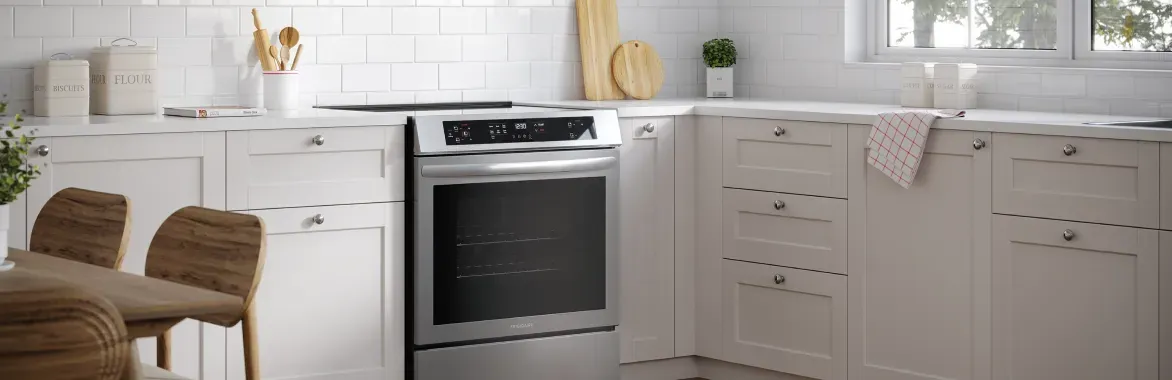
A conventional oven (sometimes called a standard or traditional oven) heats food primarily by radiant heat from the bottom (and often a broiler at the top) with minimal forced air circulation. Because hot air naturally rises and cold air falls, heat distribution can be less uniform in a conventional oven.
In other words, when you place dishes on different racks or in different zones of the oven, you may notice variations in cooking or baking performance. That’s why you’ll often need to rotate trays or adjust rack position when baking multiple layers.
Strengths of Conventional Ovens
-
Typically simpler, with fewer moving parts (no fan or air‑circulation system).
-
Excellent for certain cooking styles where you don’t want air being forced around (for instance, delicate cakes or soufflés).
-
Often less expensive than comparable convection models.
Considerations When Using a Conventional Oven
-
Preheating may take longer and you may experience “hot spots” or uneven results on different racks.
-
Baking multiple trays at once may require swapping positions mid‑bake or monitoring more closely.
-
For high‑volume or multi‑dish cooking scenarios, it may be less efficient.
What Is a Convection Oven?
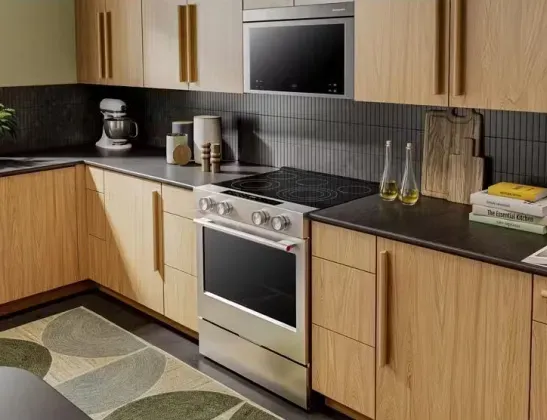
A convection oven adds a fan (and often an exhaust) that circulates heated air throughout. This airflow helps distribute hot air more evenly, reducing cold zones and improving consistency.
Because of the more uniform air circulation, food often cooks more quickly and evenly. Typical advice is to reduce the temperature by about 25 °F (or ~15 °C) or shorten cooking time when using the convection setting compared to conventional mode.
Advantages of Convection Cooking
-
More even browning and better results when baking or roasting multiple items at once.
-
Often faster cooking and improved efficiency, which can save time and energy.
-
Better for multi‑rack baking, large roasts, or when you want consistent results.
Things to Keep in Mind with Convection
-
Because of the moving air, delicate baked items (like soufflés or some delicate cakes) may not perform as well in a strong airflow; in those cases, you may want to turn convection off or use “conventional” mode.
-
Convection models may cost more or have more features to maintain.
-
Your cooking time/temperature may need adjustment when switching from conventional to convection.
Which Oven Is Better for You?
The answer depends on how you cook, what you cook, and your kitchen setup. To make your decision easier, let’s consider some use‑case scenarios.
If You Bake Frequently
If you bake cookies, breads, cakes, pies, or do layered cooking (multiple trays or pans) regularly, a convection model is a strong choice because it will help ensure even results across racks and reduce hot‑spot risks.
If You Primarily Roast or Cook One Dish at a Time
If most of your cooking involves roasts, casseroles, single‑dish meals, or you’re less concerned about multi‑rack baking, a conventional oven may suffice. You may sacrifice a bit of uniformity or speed, but depending on your habits the difference may be minimal.
When You Entertain or Cook for Large Groups
Here is where a convection model really shows strength, especially if you want to bake desserts while roasting a large piece of meat at the same time, or you want consistent results across multiple trays. A double‑wall oven setup can offer exceptional flexibility in this scenario. For example: one oven in convection mode, the other in conventional mode or a different temperature.
Considering Single, Double, Electric or Gas Wall Ovens
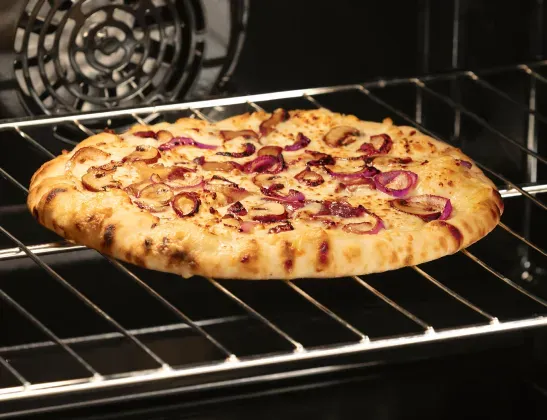
Wall ovens offer various different configuration options you can choose, depending on your preference and home design and layout:
-
Electric Oven: Great if you need one good‑sized oven and your cooking style is typical.
-
Double Wall Oven: Two ovens for greater flexibility and multitasking; particularly useful for hosts or bigger kitchens.
-
Gas Oven: If you have a gas line and prefer gas heat, a gas oven is a great alternative that doesn’t compromise quality.
Practical Wall Oven Buying Tips
When you’re shopping for a wall oven (whether convection or conventional), keep the following in mind:
-
Size & Fit: Most built‑in wall ovens come in widths like 24”, 27”, 30”. Measure your cabinetry carefully.
-
Oven Space Size: Consider how many dishes you prepare at once. Larger capacity helps with roasts and full‑meal prep.
-
Convection Features: If you choose convection, check how strong the fan is, whether it’s “true convection” versus “fan‑assist,” and how the controls allow you to switch modes.
-
Installation Type: Decide between single vs double wall ovens. If you entertain often or cook for many, a double setup offers flexibility.
-
Fuel Type: If you prefer gas, ensure your model is gas ready (though electric wall ovens are more common and offer very good evenness for baking).
-
Control & Connectivity: Many modern models include smart‑features, remote monitoring, temperature probes, self‑cleaning, etc.
-
Budget & Value: The more advanced the features (true convection, smart controls, etc.), the higher the cost. Choose based on cooking style and frequency.
Shop Wall Ovens Right for You at DeWaard & Bode
Ready to upgrade your kitchen? Explore the full range of wall ovens at DeWaard & Bode, including convection‑enabled models, single‑ and double‑wall formats, and gas or electric options. Whether you choose conventional or convection, we’ll help you find the perfect oven to match your cooking style and kitchen design.
We also offer a catalog of cooking appliances from top brands to help make sure your kitchen is designed and performing exactly as you expect it to, including ranges, cooktops, hoods, microwaves, and more.
Contact us or visit one of our appliance stores in Bellingham or Burlington, Washington, to speak with our appliance experts. We also offer delivery and installation services to ensure your cooking appliances are installed efficiently with care into your home.
Related readings from our blog:
FAQs: Convection vs Conventional Oven: Which Oven Is Better?
What is the main difference between a convection oven and a conventional oven?
The main difference is that a convection oven uses a fan (and sometimes an additional heating element) to circulate hot air for more uniform cooking, while a conventional oven relies on static heating elements and natural air circulation.
Is a convection oven always better for baking?
Not always. Convection is excellent for roasting, multi‑rack baking, and speeding up cooking. But for delicate items like soufflés, very light cakes, or certain breads, a conventional mode may yield better results.
Should I choose an electric or gas oven with convection capabilities?
Both can offer convection features, but electric wall ovens tend to provide more consistent temperatures, which is especially helpful in convection mode. Gas wall ovens may heat quickly but can have more temperature variance. Refer to your cooking style and installation constraints.
What if I cook both everyday meals and host large gatherings frequently?
In that case, consider a dual‑mode oven (conventional + convection) or a double wall oven so you can use one oven space in conventional mode and another in convection mode simultaneously. That gives you ultimate flexibility.
Related Articles